Why We Don't Use Sunflower Oil in Our Skincare (The Truth About Seed Oils and PUFAs)
For years, sunflower oil has been championed as a darling of the natural beauty world. It’s light, it’s plant-based, and it's everywhere. I used to think sunflower oil was a great skincare ingredient, too.
But as we began studying the deeper molecular science of how different fats interact with our skin barrier, a much different picture emerged.
If you want to achieve a truly calm, radiant, and resilient complexion, it might be time to take a closer look at what your favourite skincare products are actually made of. Here is why we completely exclude sunflower oil (and other "seed oils") from our formulas—and why your skin might thank you for doing the same.
What Exactly is a "Seed Oil"?
Sunflower oil is often referred to as a "seed oil"—but what does that mean?
When we look into cosmetic and dietary science, the term "seed oil" is generally a shorthand way of referring to oils that are exceptionally high in polyunsaturated fatty acids, commonly known as PUFAs.
Fats are categorized by their molecular stability. While saturated fats have highly stable, rigid molecular bonds, polyunsaturated fats have multiple double bonds. This structural difference completely changes how the oil behaves when exposed to your body and the environment.
The Omega-6 Imbalance Problem
Oils high in PUFAs (like sunflower) are rich in Omega-6 fatty acids. Which aren't necessarily bad. They are an essential part of biology. However, context matters.
Our modern diets (and modern skincare routines) are completely over-filled with Omega-6s, leading to a massive chronic imbalance with Omega-3 fatty acids.
Why is this imbalance such a problem for your skin? Unfortunately, Omega-6 fatty acids promote inflammation by actively inhibiting the anti-inflammatory benefits of Omega-3s. When your skin is constantly bombarded by an over-abundance of topical Omega-6s, it can leave your skin barrier in a perpetually reactive, inflamed state.
The Oxidation Trap: What the Science Says
The biggest issue with putting high-PUFA seed oils on your face comes down to pure chemical stability. Because of those loose chemical double bonds we mentioned earlier, PUFAs quickly oxidize (meaning they go rancid) when exposed to light (including sunshine!), heat, and air.
The second a seed oil oxidizes on the shelf or on your face, it creates highly unstable molecules called free radicals. Instead of nourishing your complexion, these topical free radicals can damage your delicate skin cells, leading directly to premature aging, fine lines, wrinkles, and chronic dullness.
This isn't just a theory—it is well-documented in medical literature:
- Rapid Degradation: A 2023 study published in Molecules evaluated the chemical pathways of lipid oxidation. The researchers noted that sunflower oil's specific polyunsaturated profile makes it highly susceptible to rapid oxidative processes, forming unwanted secondary oxidation products if it isn't heavily modified or preserved with intensive outside antioxidants (Ghendov-Mosanu et al., 2023).
- The Autooxidation Chain Reaction: A comprehensive scientific review in Frontiers in Pharmacology analyzed vegetable oils for dermal use. It explicitly highlighted that a major drawback of high-linoleic seed oils like sunflower oil is their inherent vulnerability to autooxidation. The moment these fats are exposed to ambient oxygen and light, a chain reaction triggers free radicals that break down the oil into unstable carbonylic fragments (Poljšak & Kočevar Glavač, 2022).
When you look at the raw chemistry, applying an oil that is so highly vulnerable to going rancid on your skin is not exactly ideal.
What We Use Instead: Low-PUFA, Highly Stable Oils
To protect your skin from oxidation and chronic inflammation, we choose not to use sunflower oil anywhere in our skincare.
Instead, we formulate with premium, deeply nourishing, protective oils and fats that are naturally very low in PUFAs and highly resistant to oxidation. We look to incredibly stable, biocompatible lipids like:
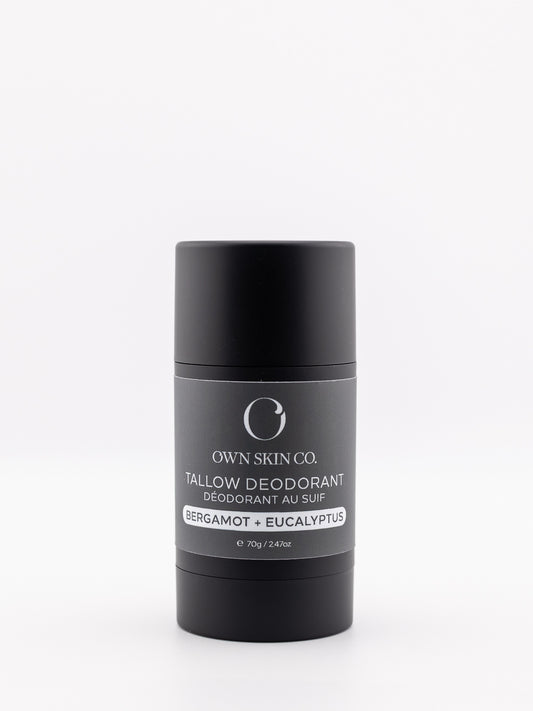
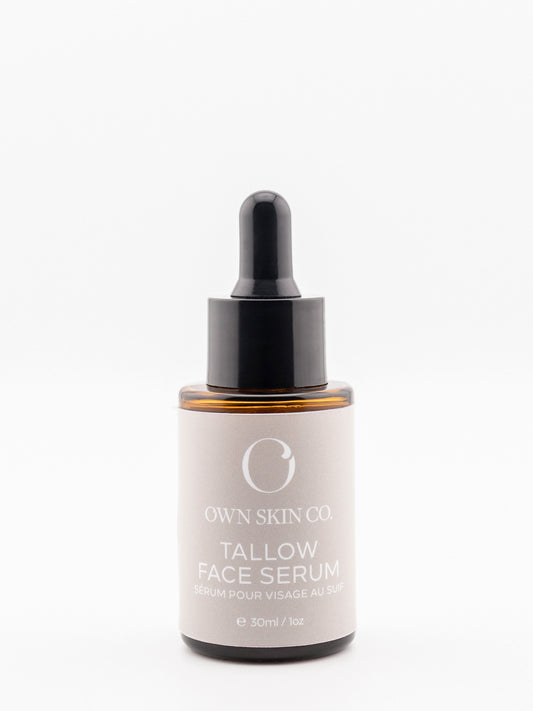
- Grass-Fed & Finished Beef Tallow: An ultra-stable saturated fat packed with barrier-essential stearic and palmitic acids that closely match the skin's moisture needs without risking oxidation.
- Jojoba Oil: Which behaves like a liquid wax ester, perfectly mimicking skin stability.
- Olive Oil & Coconut Oil: Rich in ultra-stable monounsaturated and saturated fats.
- Camellia Oil & Meadowfoam Seed Oil: Unbelievably shelf-stable and packed with native antioxidants.
By giving your skin barrier fats that stay stable in the presence of air, heat, and light, you protect your skin from free radical damage and help soothe inflammation from the outside in.
(Note: This molecular balance matters just as much for the amount of Omega-6 in our diets too, but that’s a conversation for another day!)
Is your vanity secretly full of unstable seed oils?
Check the ingredient lists on your current face oils and moisturizers. If you're ready to switch to a stable, low-PUFA, barrier-first routine, explore our deeply restorative, seed-oil-free skincare today.
Academic References:
- Ghendov-Mosanu, A., Popovici, V., Constantinescu, C. G., Deseatnicova, O., Siminiuc, R., Subotin, I., Druta, R., Pintea, A., Socaciu, C., & Sturza, R. (2023). Stabilization of Sunflower Oil with Biologically Active Compounds from Berries. Molecules, 28(8), 3596. https://doi.org/10.3390/molecules28083596
- Poljšak, N., & Kočevar Glavač, N. (2022). Vegetable Butters and Oils as Therapeutically and Cosmetically Active Ingredients for Dermal Use: A Review of Clinical Studies. Frontiers in Pharmacology, 13, Article 868461. https://doi.org/10.3390/fphar.2022.868461